Discover the challenges blocking 3D's shift to web-native tools, from data complexity to WebGL limitations, and explore WebGPU's potential with Surfee's innovative approach.

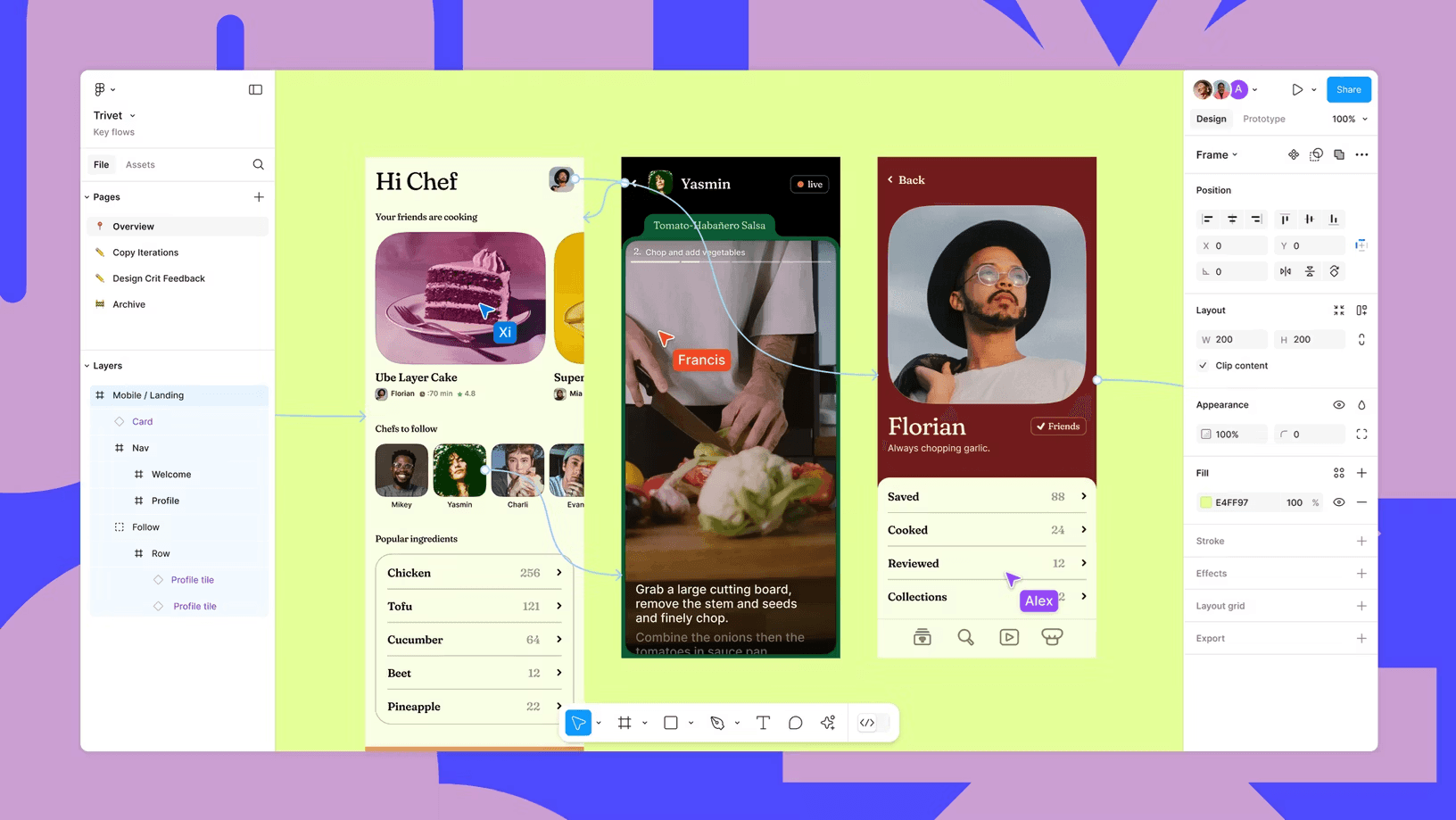
Every 3D designer has probably wondered at some point: "Why can't 3D tools be as lightweight and web-accessible as Canva or Figma?" Yet here we are, still dependent on heavy desktop applications for serious 3D work. While web-based services have been around for years, why has the 3D field been so slow to embrace the web environment?
In this post, I'll explore the various factors blocking 3D's migration to the web, and how 3D is gradually evolving in web environments despite these challenges.
Why Is 3D So Difficult to Handle on the Web?
3D data goes far beyond simple file size issues—its very structure is incredibly complex.
Data Structure Complexity
If text is one-dimensional and images are two-dimensional, 3D involves highly complex structures with three-dimensional information like X, Y, Z coordinates for points, lines, and surfaces. Add to this various visual information like materials, lighting, animation, plus design process rules and constraints.File Format Fragmentation
Different industries use different 3D file formats. Gaming and animation primarily use "Polygon" approaches, while product design and engineering rely on "Parametric" methods.Data Compatibility Issues
These different file formats require different types of data, making compatibility challenging. Just as PNG preserves transparency while JPG doesn't, 3D files face much higher risks of data loss during format conversion.
For example, when transferring data between 3D modeling programs like Rhino and SolidWorks, or with external rendering programs like KeyShot, critical information frequently gets lost, requiring rework.
These complexity and compatibility issues make 3D professionals constantly anxious about data corruption or loss whenever files are exchanged.
WebGL's Arrival and Its Limitations

WebGL emerged as the technology to handle 3D data in web browsers. WebGL enables browsers to leverage computer graphics processing units (GPUs) to render 3D graphics. While this technology made 3D viewing possible on the web, several constraints limited its practical professional use.
The biggest issue was performance limitations. WebGL operated with a sequential structure where the CPU would send work to the GPU, then wait for completion before proceeding. This made parallel processing impossible when handling complex, heavy data, inevitably slowing performance. Users experienced stuttering when rotating 3D models in browsers, creating the perception that "web 3D is slow."
The second major limitation was lack of scalability. Due to browser constraints, WebGL couldn't fully utilize hardware capabilities. Complex tasks like physics simulation or large-scale data processing were difficult to handle on the GPU. Additionally, using WebGL-based libraries made it extremely challenging to add or modify features beyond their support scope, creating barriers to service advancement. Development teams became dependent on libraries, making it difficult to freely add features aligned with business directions.
WebGPU and New Possibilities

Amid these technical limitations, a major breakthrough arrived for web 3D technology: WebGPU. WebGPU adopts a parallel structure where CPU and GPU can handle multiple tasks simultaneously, delivering tremendous performance improvements. This opens the path for high-performance 3D work directly in web browsers, bringing us closer to an era where 3D data can be processed on the web without heavy desktop installations, based on lightweight accessibility and compatibility.
However, challenges remain in this field. The primary issue is still processing complex and fragmented 3D data. Even when using common file formats, compatibility issues and data corruption between different programs persist—problems that plague desktop 3D programs as well. Despite WebGPU's arrival, providing users with a smooth experience requires deep understanding and optimization expertise for 3D data structures. We need solutions that go beyond simply providing technical tools to fully utilize data while enhancing work efficiency.
Surfee's Vision for the Future of Web 3D
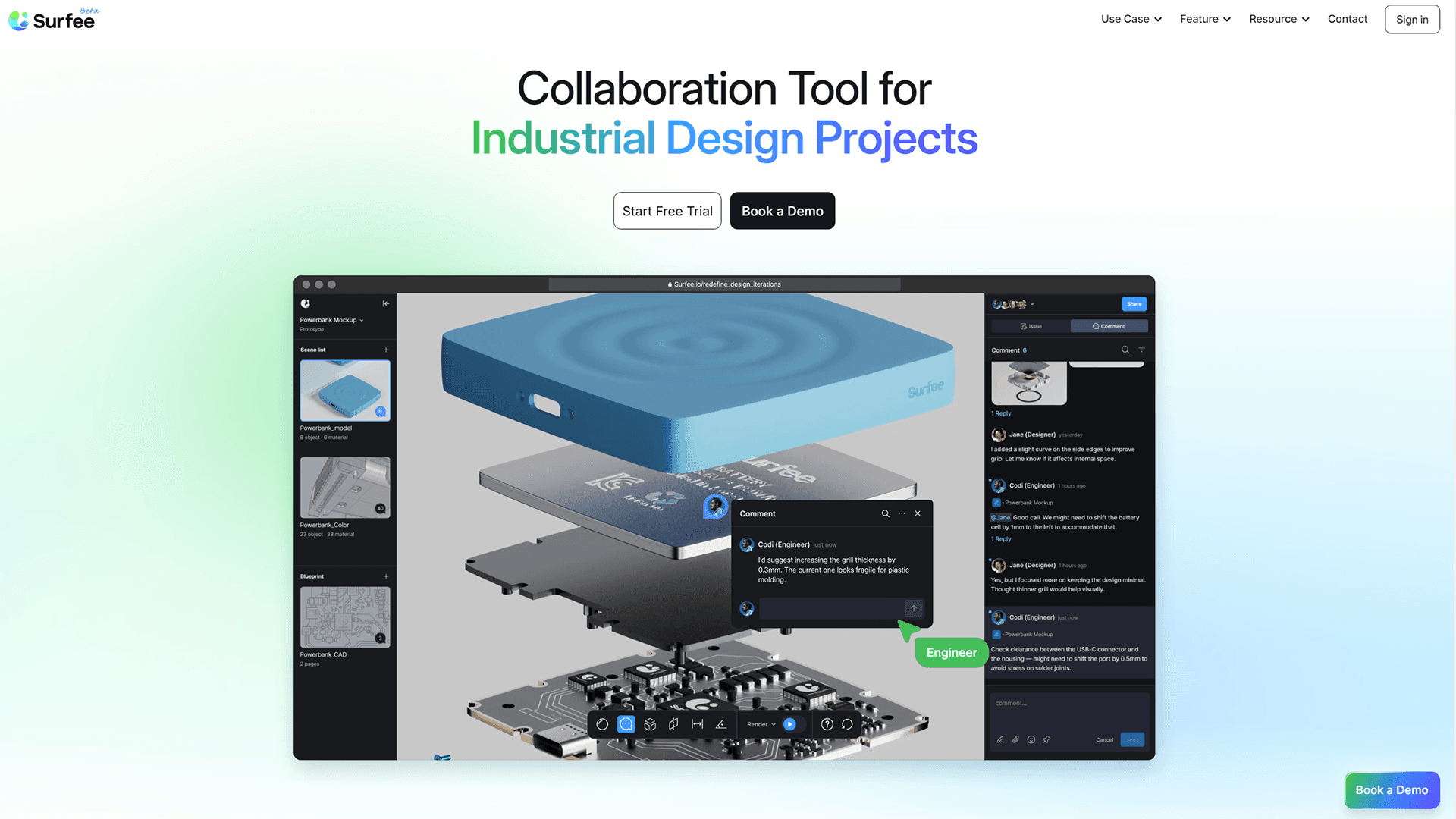
With WebGPU enabling high-performance 3D work on the web, the 3D field now holds the potential for broader accessibility and collaboration, similar to what Figma and Canva achieved in 2D design. However, despite all this technological progress, properly handling and sharing complex, fragmented 3D data remains a significant challenge.
This is precisely where Surfee aims to chart a new path for the 3D industry. Beyond being just another tool, we've brought complex rendering processes into web browsers, leveraging our expertise in efficiently processing and managing large-scale 3D data in web environments. This reduces unnecessary trial and error when exchanging 3D data, creating a collaborative environment where entire teams can view and communicate through a single link—no separate installations or conversion processes required.
We're building Surfee as the "hub of 3D workflows"—maximizing 3D professionals' capabilities while facilitating communication with non-specialists. We anticipate that in the near future, the 3D field will see widespread adoption of web-based services, just like 2D graphics, creating more flexible and efficient work environments. Soon, not only 3D specialists but all professionals will be able to share and communicate with 3D data much more easily.
The web revolution that transformed 2D design is finally coming to 3D—and we're excited to be part of making that future a reality.