Learn why 3D designers and non-3D team members struggle to communicate, and how Surfee enhances collaboration with web-based 3D tools.

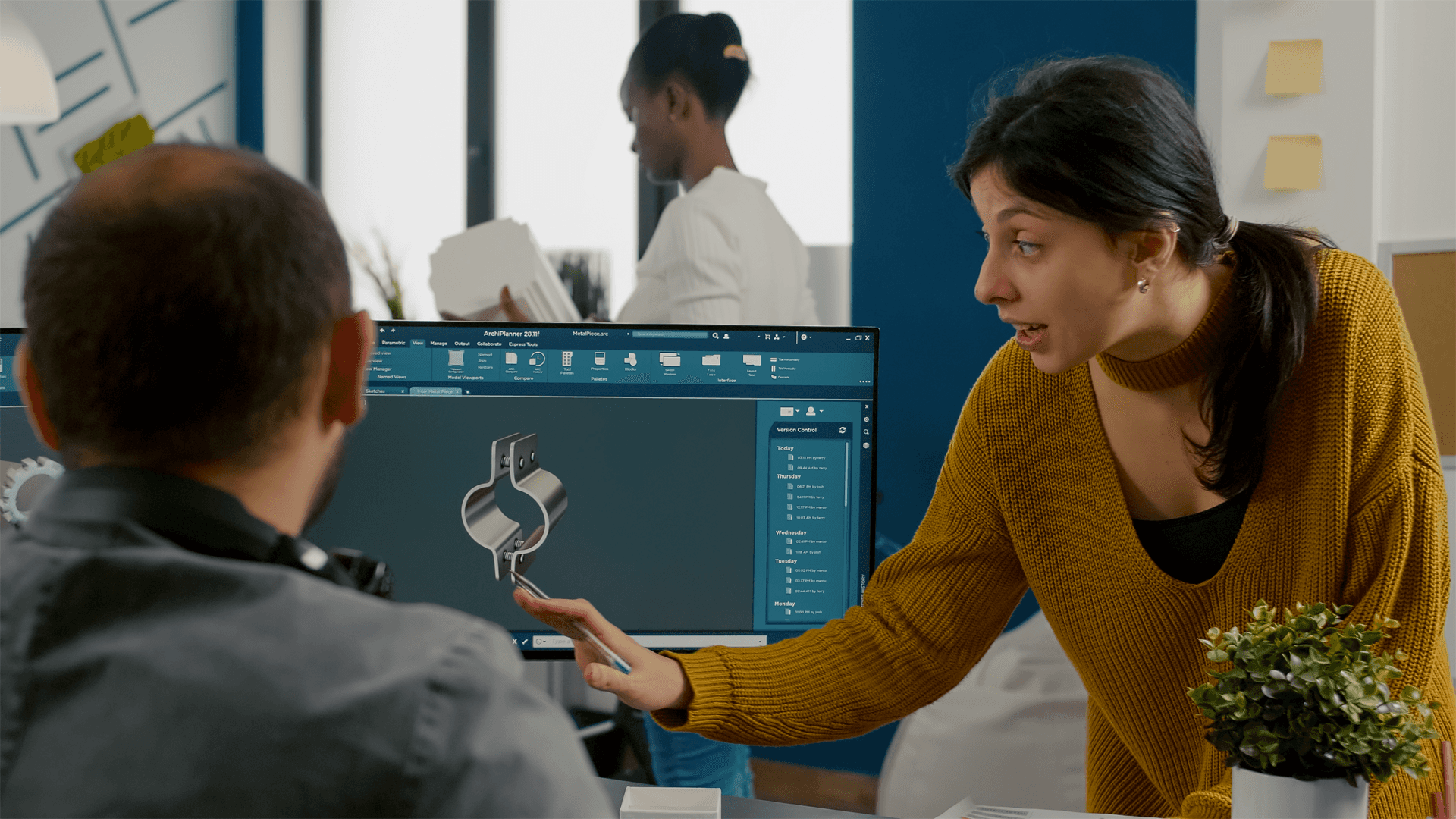
3D projects involve collaboration among many stakeholders from start to finish. A common issue in this process is communication difficulty. Unlike text documents or 2D images, 3D files, due to their complexity, make seamless collaboration across teams challenging.
Most collaboration happens via email, messaging apps, or tools, but 3D data is hard to share and review in these environments. Even if a 3D designer creates a detailed model, non-3D team members—like planners or marketers—often can’t open the file. As a result, communication relies on “flattened” outputs like screenshots or 2D drawings, which burdens 3D designers with extra tasks like file conversion and documentation. This isn’t just inconvenient—it significantly reduces project efficiency.
Why Sharing 3D Files Directly Doesn’t Solve the Problem
No matter how hard 3D designers try, simply sharing 3D files doesn’t resolve communication issues. Text documents or 2D images are easily accessible and editable by anyone, but 3D files require specialized software. For non-3D team members, installing and learning expensive, complex software is a major barrier.
Consequently, communication often shifts to 2D images, emails, or slides, stripping away the 3D model’s depth and interactivity. This creates extra work for 3D designers, who must capture multiple angles or record videos to explain their work. Such processes not only add hassle but also risk losing critical context, like spatial relationships or interactivity.
A common scenario illustrates this: a product designer shares a 3D model with the marketing team to discuss subtle color adjustments. However, the screenshot provided distorts the color due to lighting or angles, leading to misunderstandings. The marketing team gives feedback based on the incorrect color, and the designer must revise and reshare, creating a cycle of inefficiency. The complexity of 3D files, software barriers, and fragmented feedback loops amplify these inefficiencies in 3D projects.
A Solution for 3D Collaboration: The Role of Surfee

Text documents and 2D design fields have largely solved collaboration issues through web-based tools like Google Docs or Figma, enabling real-time sharing and feedback. Handling complex 3D data on the web, however, is a relatively new development.
A 3D product collaboration tool like Surfee bridges this gap. By sharing a web link, 3D designers allow non-3D team members to view models directly in a browser without needing specialized software. This enables precise feedback, cutting feedback cycles from days to hours. For instance, using Surfee, teams can review a model interactively, reducing miscommunication and streamlining revisions.
In many cases, the success of a 3D project hinges on efficient communication as much as technical skill. Adopting a 3D product collaboration tool can simplify this process more than you might expect. As these technologies evolve, they will continue to make 3D collaboration easier and more efficient.