Explore how 3D collaboration tools like Surfee simplify teamwork, bridging the gap between experts and non-experts with browser-based efficiency and real-time feedback.

Why Does 3D Collaboration Still Feel So Hard?
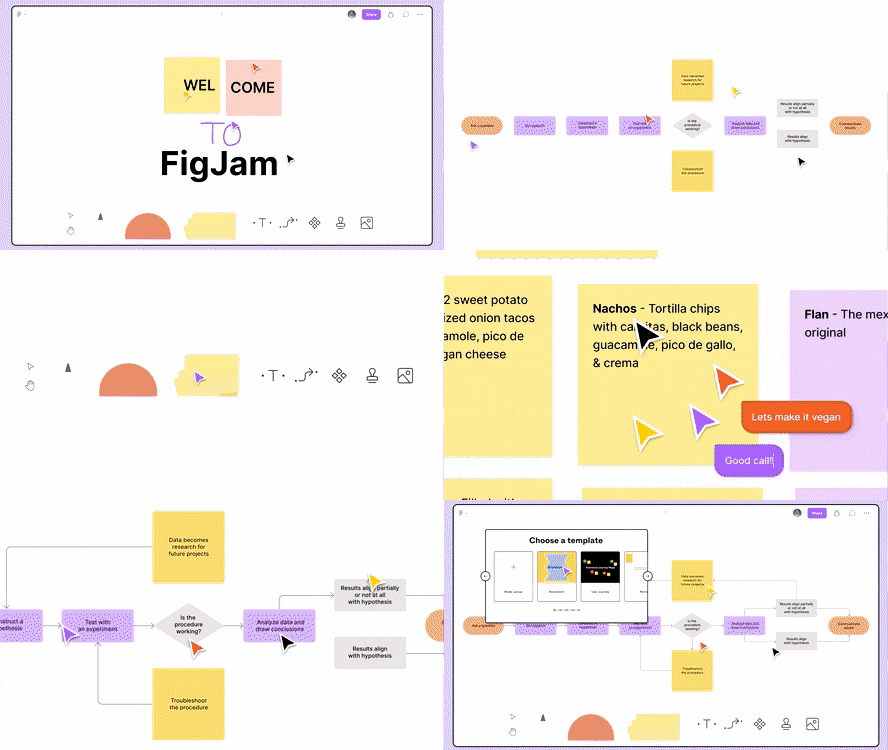
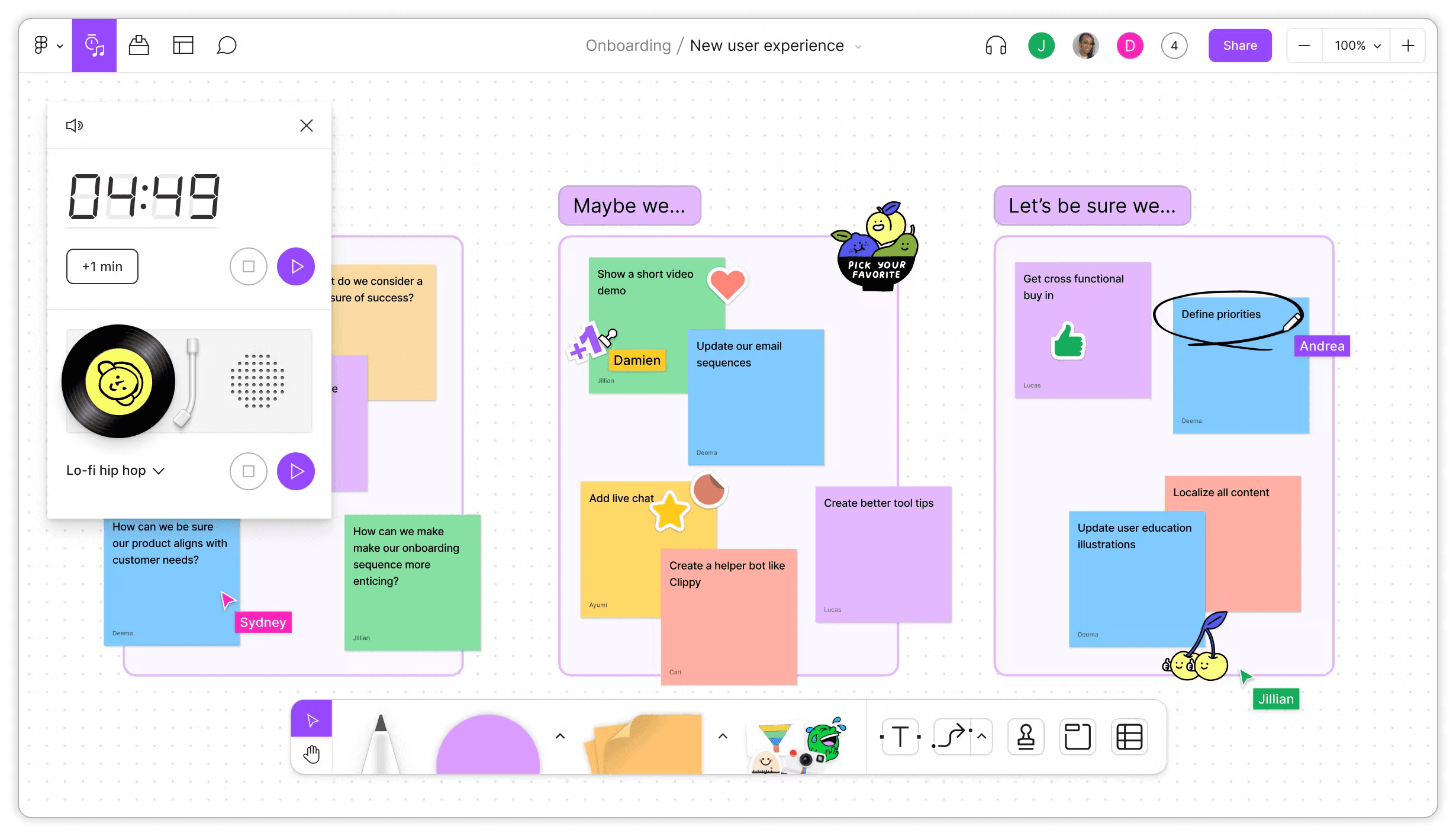
The era of design collaboration has arrived. Design is no longer just for designers. Planners, developers, marketers, and other team members share ideas in real-time and easily participate in design through tools like Figma, Miro, and Canva. Thanks to these, 2D design has become a universal language.
But 3D collaboration feels like a different story. The complexity and unfamiliarity of 3D models create a high barrier for non-experts, and there’s a prevailing perception that 3D collaboration tools remain unfamiliar and limited for them.
The Gap Between 3D Sharing and Collaboration
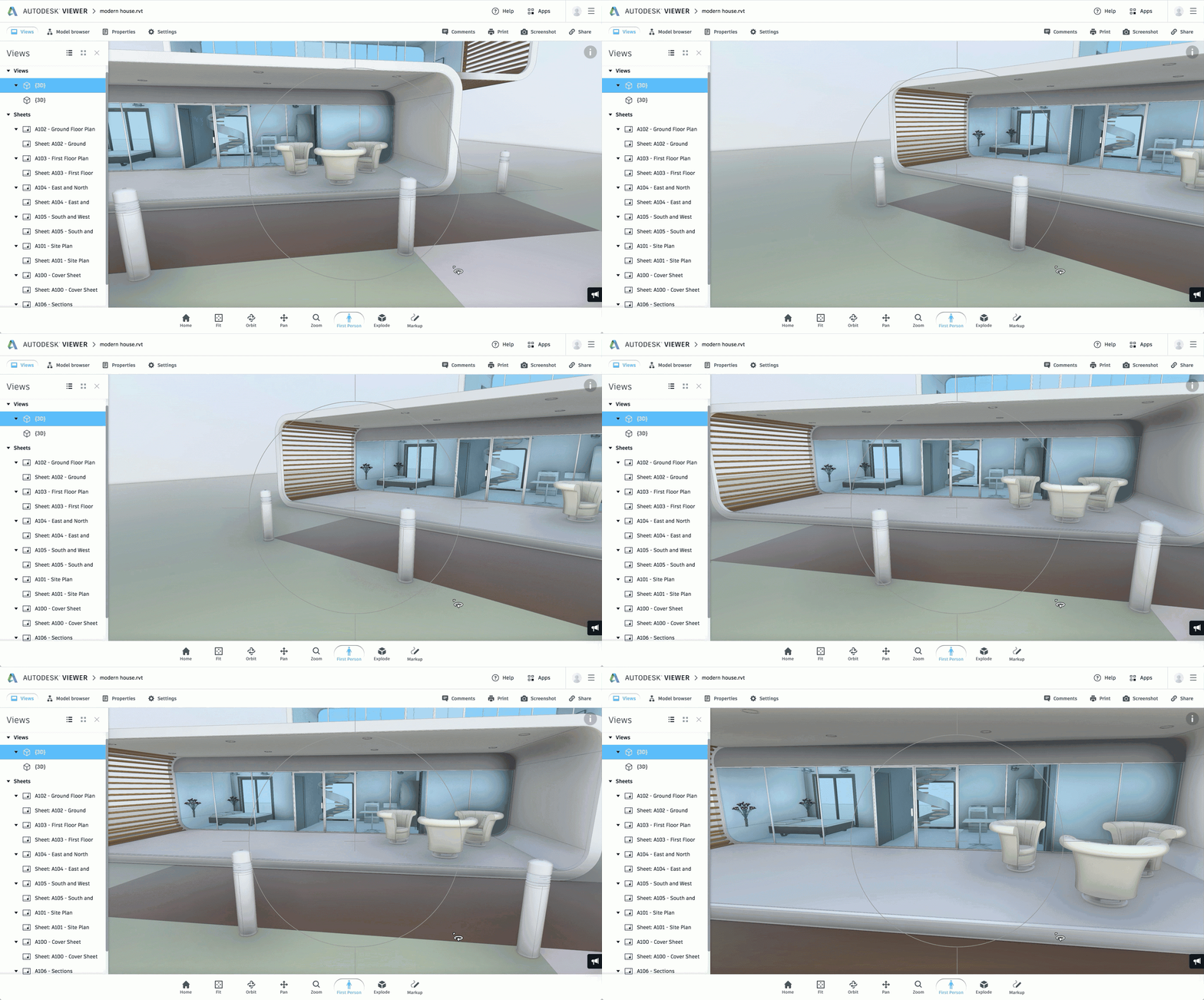
Of course, solutions for 3D work aren’t entirely absent. Powerful tools like Autodesk Viewer and Sketchfab have helped share and review 3D models effectively. These tools allow 3D files to be viewed in web browsers, greatly enhancing the accessibility of 3D visualization. Sharing a 3D model with a single link, rotating it from various angles, or zooming in has become possible.
These tools also offer annotation and commenting features, allowing communication on specific parts. However, they differ significantly from “real-time collaboration.” Unlike the simultaneous workflows of 2D design tools, where multiple people work and comment on a shared canvas, these 3D tools have relatively weaker collaborative features. Beyond simply showing files created by experts, they lack the ability to encourage non-experts, like planners or marketers, to actively contribute opinions and participate in design decisions.
As a result, existing 3D sharing tools are primarily used by designers and engineers to “display” work, while non-experts like planners or marketers still rely on outdated methods, such as annotating 2D screenshots of 3D models. This leads to inefficient communication and frequent misunderstandings.
Why Is 3D Design Collaboration More Complex Than Others?

These difficulties arise from communicating 3D files through 2D images. Annotating feedback on a 2D image may seem clear, but it can lead to different interpretations depending on the viewer’s perspective. For example, when conveying feedback like “please refine this part,” the depth or curvature of a 3D model appears flat in a 2D image, making it hard to gauge the exact scope. This often forces designers to repeatedly clarify feedback, leading to unnecessary rework.
Moreover, the absence of an environment like Figma or Miro, where feedback is given directly on the work, is a major issue. In 2D collaboration, design revision requests are recorded within the file, forming a history that guides future work. In 3D, feedback from viewers must be transferred to screenshots or documented separately.
This separation of feedback from the work disrupts communication continuity and increases the risk of missing critical information. The inefficiency of feedback not being directly reflected in the designer’s work environment is a fundamental reason why 3D collaboration feels complex.
Bridging the 3D Collaboration Gap with Surfee

Surfee is a 3D product collaboration tool designed to bridge the gap between experts and non-experts. With Surfee, even those unfamiliar with 3D models can collaborate as easily as they do in Figma or Miro.
Surfee addresses 3D collaboration challenges with these features:
Browser-Based Simplicity: Operates in a web browser without software installation, allowing 3D collaboration to start by inviting team members and sharing a link.
Easy Feedback Structure: Annotating and commenting directly on specific parts of a 3D model replaces screenshots and emails, enhancing communication accuracy.
Streamlined Version Control: Upload multiple projects to a single link, tracking model sharing and feedback to keep the communication context always up-to-date.
High-Quality Visualization: Supports path-tracing-based high-quality rendering, enabling anyone to view realistic 3D products.
Surfee was developed to help product development teams collaborate faster and more accurately around 3D models.
Start with Surfee now and experience the efficiency of 3D collaboration firsthand.